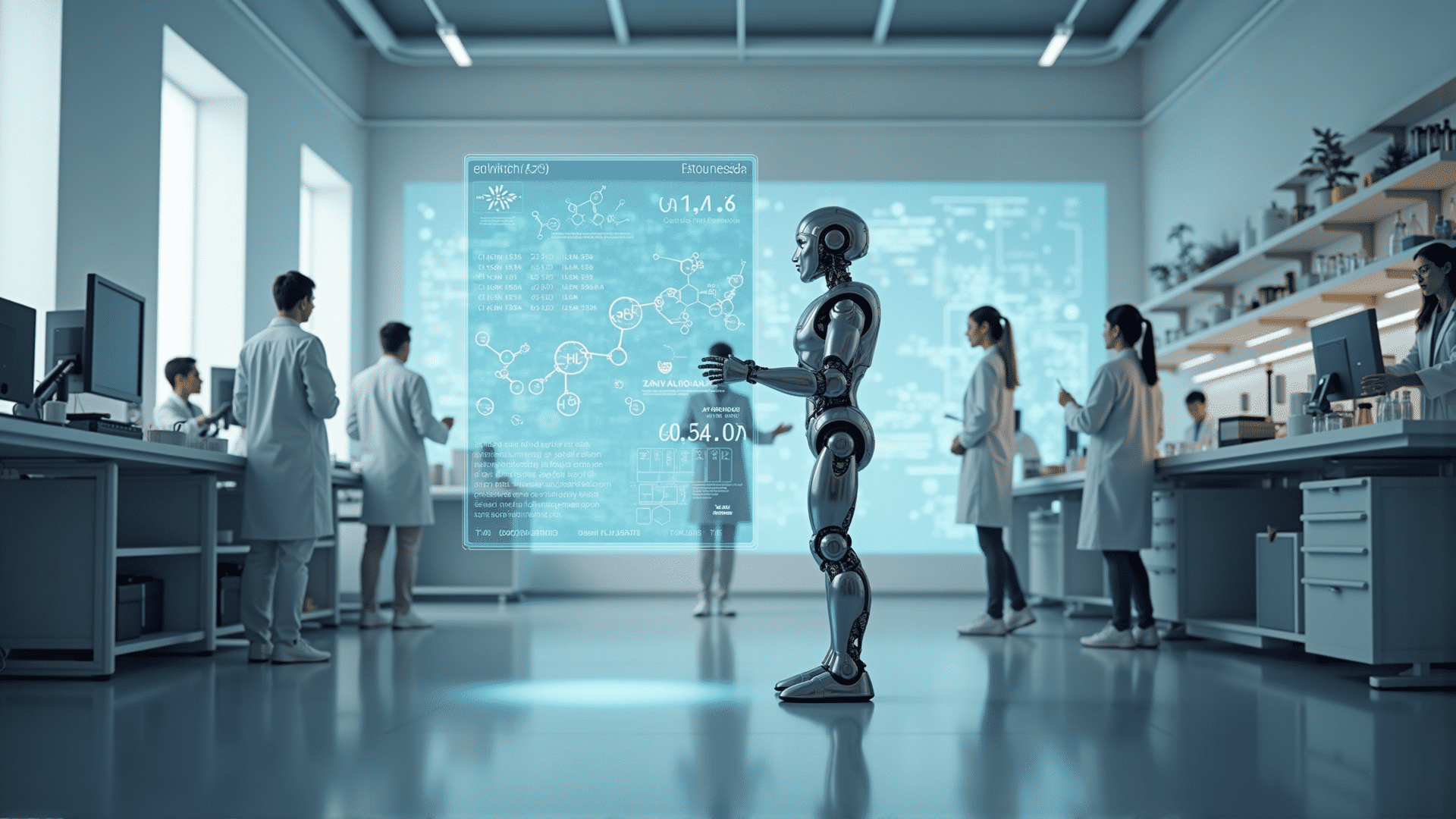
Artificial intelligence (AI) is increasingly being integrated across various sectors, fundamentally altering how industries operate and innovate. The transformative power of AI lies in its ability to process vast amounts of data, identify patterns, and make decisions faster and more accurately than ever before. This capacity not only enhances efficiency but also opens new horizons for innovation in science and technology.
In healthcare, AI is revolutionizing diagnostics and patient care. Machine learning algorithms can analyze complex medical data to detect diseases earlier than traditional methods. For instance, AI systems in radiology can interpret medical images with a level of precision that rivals human experts, sometimes even identifying anomalies overlooked by the human eye. This early detection capability is critical in diseases such as cancer, where early treatment significantly improves outcomes.
The financial industry is also seeing significant advancements due to AI integration. Algorithms process market data at incredible speeds, enabling more informed and precise trading decisions. Additionally, AI-powered fraud detection systems can monitor transactions in real-time, identifying suspicious activities and preventing losses. The automation of routine tasks allows financial professionals to focus on strategy and client relationship management, enhancing both efficiency and service quality.
In manufacturing, AI optimizes production processes through predictive maintenance and quality control. By analyzing data from machinery sensors, AI can predict equipment failures before they occur, reducing downtime and maintenance costs. In quality assurance, AI systems can identify defects in products with greater accuracy and speed than human inspectors, ensuring higher standards and reducing waste.
The impact of AI extends to scientific research as well, where machine learning models accelerate discoveries by analyzing complex datasets that would take humans decades to sift through. In drug discovery, AI algorithms can predict how different molecular structures will interact with biological targets, significantly speeding up the development of new medications. Similarly, in climate science, AI tools help researchers model and predict environmental changes, aiding global efforts to combat climate change.
Despite these advancements, integrating AI into various sectors is not without challenges. Ethical considerations, such as privacy concerns and algorithmic bias, must be addressed to ensure that AI systems are fair and transparent. Additionally, the workforce must adapt to these technological changes, requiring new skill sets and training programs to prepare professionals for collaboration with AI technologies.
In conclusion, the integration of artificial intelligence across different sectors is a powerful catalyst for efficiency and innovation. As AI continues to evolve, it holds the promise of solving some of the most pressing challenges in science and society. However, to fully harness this potential, it is essential to address associated ethical issues and equip the workforce with the skills necessary to thrive in an AI-driven world. The future of AI is not just about machines taking over tasks but about enhancing human capability, enabling us to achieve more than ever thought possible.