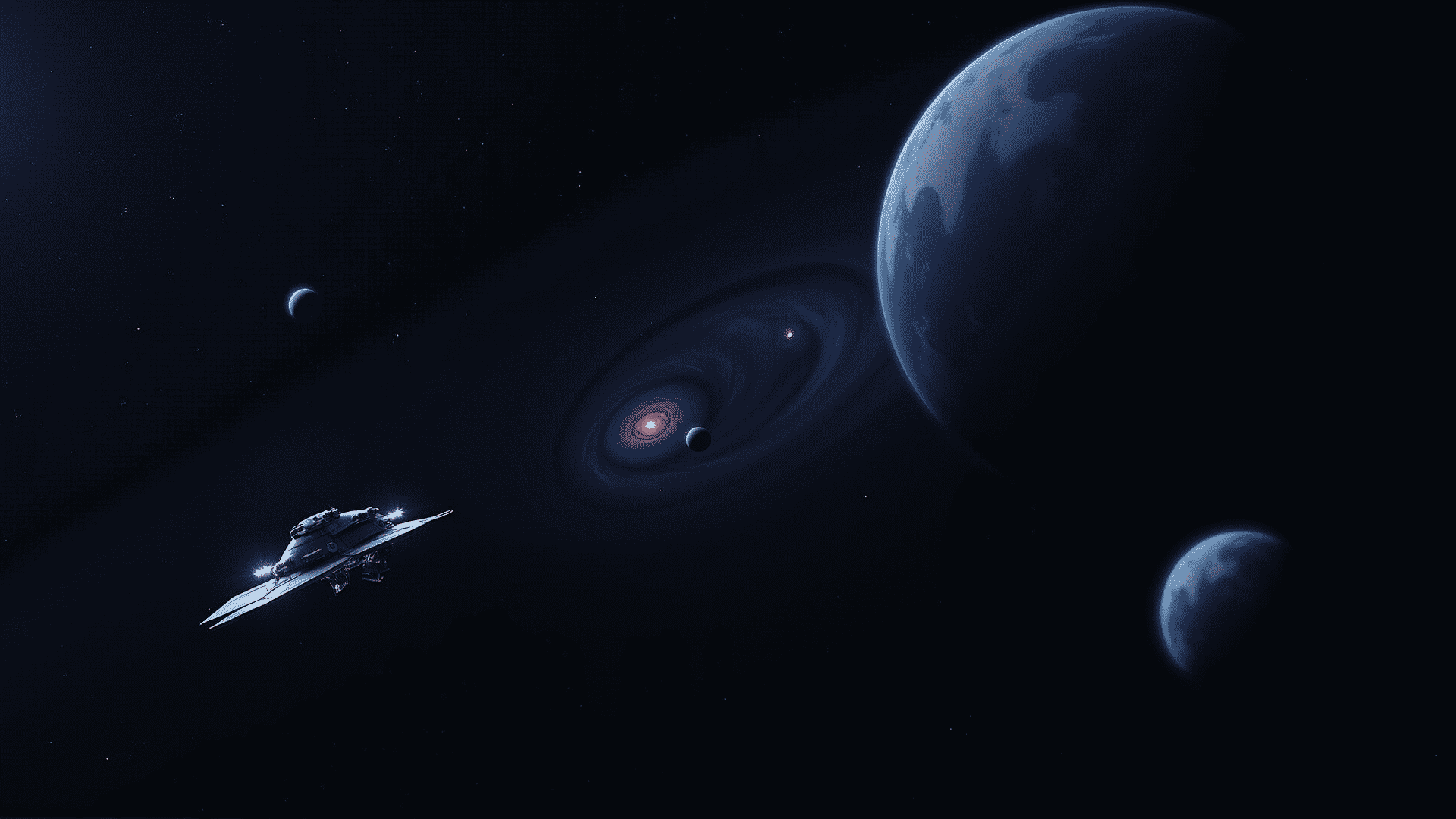
The vast expanse of space has always intrigued humanity, compelling us to explore beyond our terrestrial confines and unravel the mysteries of the cosmos. Space exploration is a testament to human curiosity and ambition, driving us to seek answers to questions that have perplexed us for millennia. From the early days of rocketry to the modern era of sophisticated spacecraft, each mission represents a leap forward in our understanding of the universe.
In the mid-20th century, the race to space began, igniting a flurry of scientific and technological advancements. The launch of Sputnik 1 by the Soviet Union in 1957 marked the beginning of human space exploration, followed closely by the United States' efforts, culminating in the historic Apollo 11 moon landing in 1969. These early missions were driven by geopolitical competition, but they also paved the way for international collaboration and a shared commitment to uncovering the secrets of space.
Today, space exploration is a global endeavor, with numerous countries and private enterprises contributing to the quest. The International Space Station (ISS) exemplifies this cooperation, serving as a hub for scientific research and a symbol of what can be achieved when nations work together. It hosts experiments that are impossible to conduct on Earth, advancing our understanding in fields ranging from biology to materials science.
Recent years have seen a resurgence in interest and investment in space exploration, fueled by both governmental and commercial entities. NASA's Artemis program aims to return humans to the Moon, using it as a stepping stone for further exploration, particularly to Mars. The Moon's proximity and conditions make it an ideal testing ground for the technologies needed for long-duration space travel and habitation.
Mars continues to ignite the imagination of scientists and the public alike. The success of rovers like Curiosity and Perseverance has provided invaluable insights into the planet's geology and potential for past life. The ultimate goal is to send humans to Mars, a monumental task that requires overcoming significant challenges, including life support systems, radiation protection, and the psychological effects of long-term space travel.
Meanwhile, private companies like SpaceX and Blue Origin are transforming the landscape of space exploration. Their innovations in rocket reusability and cost reduction are making space more accessible than ever before. SpaceX's Starship aims to transport large numbers of people and cargo to destinations across the solar system, pushing the boundaries of what is possible in human spaceflight.
Beyond human missions, robotic spacecraft continue to expand our knowledge of the solar system and beyond. Missions like the James Webb Space Telescope, which promises to reveal the secrets of the universe's earliest moments, and the European Space Agency's JUICE mission to explore Jupiter's icy moons, are set to unlock new levels of understanding about our cosmic neighborhood.
The quest for knowledge does not end at our planetary borders. Space exploration also contemplates the search for extraterrestrial life, the origins of the universe, and understanding phenomena such as black holes and dark matter. Each discovery not only answers one question but often opens the door to many more, illustrating the complex tapestry of the universe.
As we stand on the cusp of a new era in space exploration, the possibilities are as vast as the universe itself. By investing in space missions, we are investing in the advancement of science, technology, and the future of humanity. Space exploration challenges us to think beyond our earthly limitations and inspires generations to imagine a world where interplanetary travel is a reality. With each mission and each new discovery, we expand the horizons of human knowledge, proving time and again that our curiosity knows no bounds.